
Biography
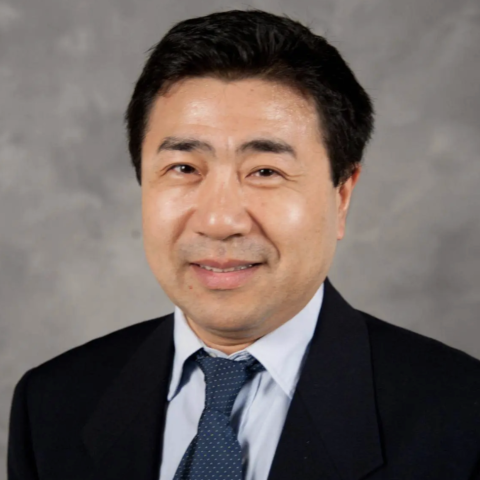
Dr. Jingfeng Wang is a professor in the School of Civil and Environmental Engineering. He obtained a BS in 1984 and a MS in 1987 from Peking University. He received his Sc.D. (Ph.D.) in Hydrometeorology from Massachusetts Institute of Technology (MIT) in February 1997. Dr. Wang was a Post-Doctoral Associate from February 1997 to January 2000, a Research Associate from February 2000 to February 2009 at MIT, and an Assistant Researcher from March 2009 to August 2011 at University of California at Irvine. Dr. Wang was a Principal Research Engineer from September 2011 to July 2012 at Georgia Tech. Dr. Wang joined Georgia Tech faculty as an Associate Professor in 2012 and earned tenure in 2018. Dr. Wang was an Honorary Visiting Professor at Flinders University, Australia, May – July 2016.
Research
Dr. Wang's research fields include foundations and models of global water-energy-carbon cycles, non-equilibrium thermodynamics of heat and radiation transfer, Amazon deforestation and regional climate dynamics, and Bayesian probability and statistics.
Education
- Sc.D. Massachusetts Institute of Technology 1997
- M.S. Peking University 1987
- B.S. Peking University 1984
Teaching
Dr. Wang teaches undergraduate and graduate courses in Hydrology and co-teaches Vertically-Integrated-Projects (VIP).
Distinctions & Awards
- Plenary Speaker, 2nd Global Evapotranspiration Symposium, 2023
- AGU Editors’ Citation for Excellence in Refereeing for Earth and Space Science, 2020
- AGU’s Outstanding Reviewers, 2018
- Warren Lecturer, University of Minnesota, 2018
- Overseas Scholarships, Tsinghua University, China, 2017
- Visiting International Research Fellowship, Flinders University, Australia, 2016
Publications
- Cho, K., Abraham, S., Kumar, S. V., and Wang, J. (2025), Remote Sensing of Live Fuel Moisture for Wildfires Using SMAP Satellite Observations, Geophysical Research Letters, 52, e2025GL117025. https://doi.org/10.1029/2025GL117025
- Zhou, W., L. Zhang, A. Y. Sheshukov, J. Wang, M. Zhu, K. Sargsyan, D. Xu, D. Liu, T. Zhang, V. Mazepa, A. Sokolov, V. Valdayskikh, A. Vasiliev, V. N. Tran, & V. Ivanov (2025), A Novel Framework to Project the Permafrost Fate with Explicit Quantification of Soil Property and Future Climate Uncertainties, Journal of Geophysical Research - Earth Surface, 130, e2024JF008168. https://doi.org/10.1029/2024JF008168
- Kim, T., Zhou, W., Tran, V. N., Zhang, L., Wang, J., Zhu, M., Sheshukov, A. V., Zhang, T., Liu, D., Mazepa, V. S., Sokolov, A. A., Valdayskikh, V. V., and Ivanov, V. I. (2025), Biases in radiative flux observations due to precipitation across the Arctic forest-tundra ecotone, Agricultural and Forest Meteorology, 74, 110814. https://doi.org/10.1016/j.agrformet.2025.110814
- Farooq, U., Liu, H., Zhang, Q., Wang, J., Shen, L. (2025), Global Lake Evaporation Estimates by Integrating Penman Method with Equilibrium Temperature Approach, Journal of Hydrometeorology, 26 (9), 1301 – 1313. https://doi.org/10.1175/JHM-D-24-0146.1
- Sun, H., Fu, L., Wang, W., Xue, J., Wang, J., Liao, W., Li, H., Sun, X., Yang, Y., Wang, J., Zhang, H., Chen, F., Zheng, Q., Meng, C., Zhang, W. (2025), Explore the relationship between Bowen ratio and Evapotranspiration in Wetlands using the Maximum Entropy Production Model, Journal of Hydrology, 661, Part B, 133586. https://doi.org/10.1016/j.jhydrol.2025.133586
Water