

Seed Grant Program
Small Investments, Big Impact – Planting the Future of Energy Innovation
ABOUT THE PROGRAM
The SEI Seed Grant Program was designed to support research and spark innovative energy solutions. It has served as a launchpad for early-career energy researchers at Georgia Tech, providing them with the resources and confidence to advance their work. Beyond funding, the program has helped researchers build multidisciplinary networks, opening doors to external funding opportunities and even contributing to the establishment of pilot facilities and large-scale research centers.
Energy and National Security Seed Grant Program
The seed funding call for year 3 is closed. Applications are under review and funded teams will be finalized by late-April.
The current seed funding program focuses on the intersection of energy and national security.
In July 2024, the Strategic Energy Institute (SEI), in partnership with GTRI, hosted a campus-wide workshop that attracted over 100 participants from across Georgia Tech. The event featured several keynote speakers and facilitated discussions on areas of opportunity that align with Georgia Tech’s strengths. It concluded with the announcement of a two-phase seed funding initiative, offering up to $500,000 annually over three years.
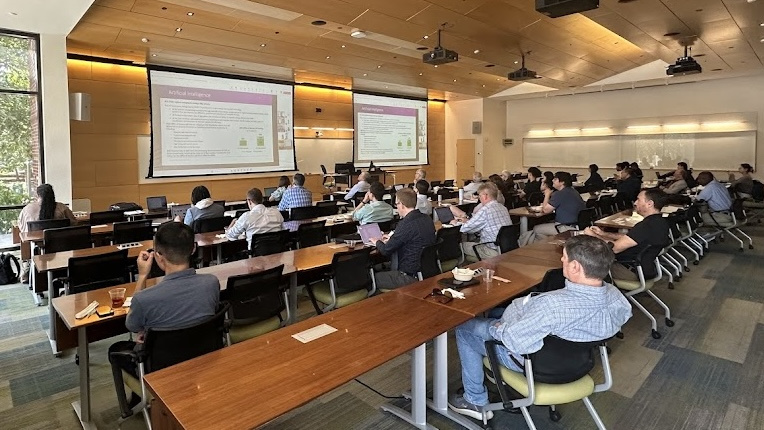
In 2025, seven teams were awarded funding for Phase Two (Category B), receiving up to $160,000 per project over 18 months to support collaborative research efforts. To sustain momentum and foster cross-disciplinary collaboration, SEI launched a series of Lunch and Learn workshops in Fall 2025. These sessions explored timely topics related to energy and national security and were open to Georgia Tech faculty, researchers, and students.
STEPPING INTO 2026: YEAR 3 OF THE PROGRAM
In its first two years, the seed‑funding program supported research through two pathways: Category A’s modest exploratory awards supporting concept development, and Category B’s multi‑phase projects. Together, these projects were centralized across several recurring themes:
- Climate‑Related Threats and the Grid
- Nuclear‑Related Security Factors
- Supply Chain Issues and Security
- Reliability of Renewables, Integration, and Grid Cybersecurity
Collectively, this work affirmed the breadth of Georgia Tech’s expertise and demonstrated the need for continued investment, motivating the extension of the seed funding call. As such, Year 3 efforts will be more ambitious— aiming to further the program’s focus on solution-based outputs, external collaboration, and stronger alignment with federal priorities. Application window closed on March 26, 2026; funded teams will be announced in late Summer.
Previous Seed Grant Programs
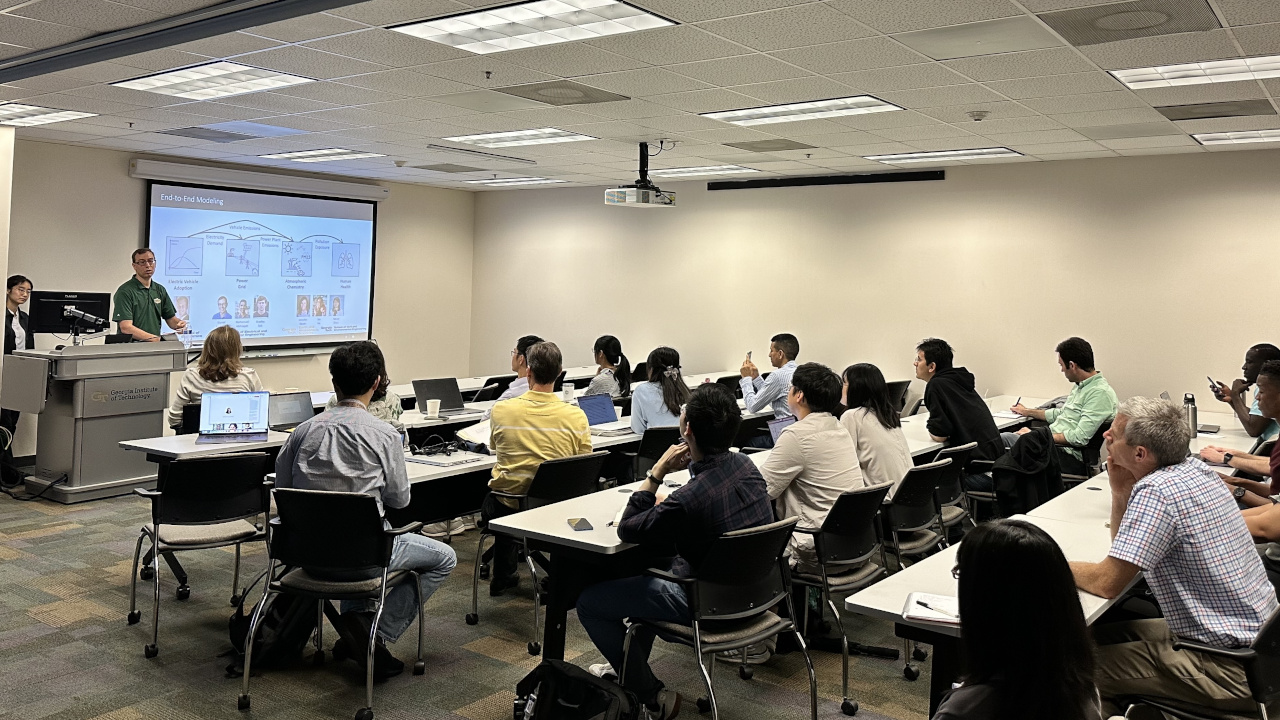 A few impactful projects from previous seed grants include:
- Vehicle-to-Grid (V2G) Research Cluster: With six seed grants awarded, this cluster brought together interdisciplinary teams to explore how electric vehicles could become dynamic assets in the energy grid. The results were stories of collaboration, innovation, and vision. These teams presented their findings in a series of workshops, culminating in a comprehensive report that laid the groundwork for future breakthroughs.
- Energy and Public Health Seed Grants: A project from this cohort led by Sally Ng, professor in Chemical and Biomolecular Engineering and Shu Takayama, professor in Biomedical Engineering examined the human health effects of various air pollutants (PM 2.5) using an advanced in vitro lung model that offers more human relevant analyses than traditional cell-based or animal-based models. This cutting-edge system offers significantly deeper understanding into healthimpacts of air quality deterioration. The project has since secured funding from the Environmental Protection Agency, underscoring the value of seeding interdisciplinary research.
- A standout initiative was the Energy Shed project—a novel concept exploring localized energy systems that empower communities to manage their own energy resources. The seed grant gave this idea, the soil to grow into a DOE-funded project now.
SEI and EPIcenter continue to champion such initiatives to foster cross-disciplinary collaboration across and beyond campus.